A quick online search will allow teachers to explore various grants available to support and enhance their classrooms. Two examples are https://www.getedfunding.com and https://teach.com/what/teachers-change-lives/grants-for-teachers/ that both have a large data base for grants in which educators can easily apply that cover a large range of education fields and grade ranges.
Bookmobile Grant Program sponsored by Lois Lenski Covey Foundation offers grants ranging from 300 to 3,000 for bookmobile programs to serve children from disadvantaged populations. Funds must be used to purchase fiction or nonfiction books published for young people preschool through grade 8. I believe this is a great way to raise literacy awareness for students that may not be able to afford available books or have access to a public library. It can be a fun and exciting way for students to shop for their selected reading materials.
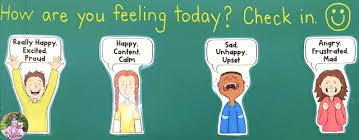
The Social Emotional Learning in Action Award from NoVo Foundation, in partnership with Education First and Rockefeller Philanthropy Advisors is grant designed to foster socioemotional skills. Some themes that I could use the funds to explore are learning mindsets, compassion, self-management, or sense of belonging. I can achieve this with the set up of center based activities, classroom victors, videos, and other materials to help early education students in my classroom explore their feelings and the feelings of others.
This lesson is to help students explore how they are similar and different by having them write how to books about getting ready for school; after the completion of the books students will share with the class. Students will work on skills of organizing thoughts in chronological order, expressing themselves through illustrations, using technology, and completing an informational text. In the end students will take all skills and present their finished book to their classmates working on communication skills.
Summary of Tasks:
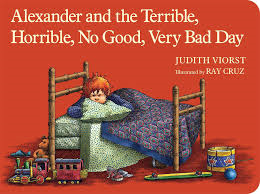
Read to the class Alexander and the Terrible, Horrible, No Good, Very Bad Day by Judith Viorst. Discuss all the problems that Alexander has getting ready for school, and ask the students to think about their routines at home. As a class create a list of what they do before school aloud; next have students organize their thoughts or steps on paper in order. Student will fill out a graphic organizer and go over their completed sheet with me before heading to the computers. Each student will then take their organized thoughts to the computer where they will type their own books and include illustrations and/or graphics to their step my step guide. Once complete students will print out their books and present them to their peers in individual presentations.
Materials:
Graphic organizer
Alexander and the Terrible, No Good, Very Bad Day by Judith Viorst
Instruction sheet with details and rubric of grading details
Microsoft word
Evaluation:
Students will be graded on final how-to book which will be handed in based upon organization of ideas and flow following the detailed rubric provided .
Students will also be graded upon their presentations to the class.
Khan Academy is a useful and versatile tool that can help teachers, students, and parents to reinforce classroom concepts and lessons virtually anywhere. The free website has thousands of videos, quizzes, and helpful hints to help students better understand a selected topic. The age range and subject matter covers almost everything that a student could ask for. While browsing on the site I chose three lessons that I found to be interesting and meaningful.
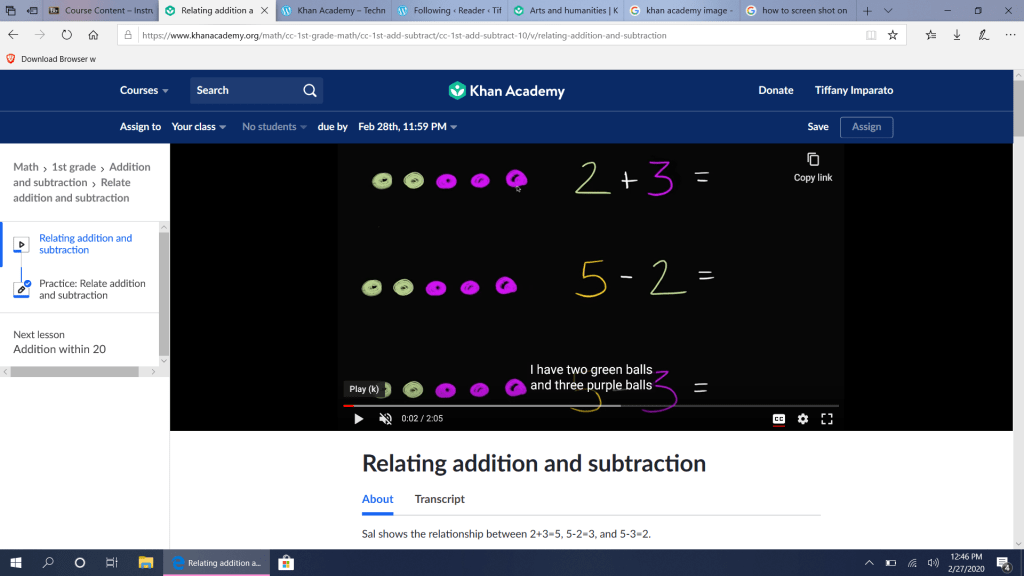
The first lesson I chose was a math lesson aimed towards first graders to help them understand the relating addition and subtraction. This lesson included an easy to follow video clip that could be quite helpful for students to visualize the concept. The video was easy to follow and explained the lesson step by step, after the completion of the video the was a small series of problems quizzed the students. The seven questions were helpful and if the student needed a hint or an additional video to help out it was easily available. If the student gets the answers correct there is a happy song played along with some cute graphics that can be really exciting and encouraging for younger children.
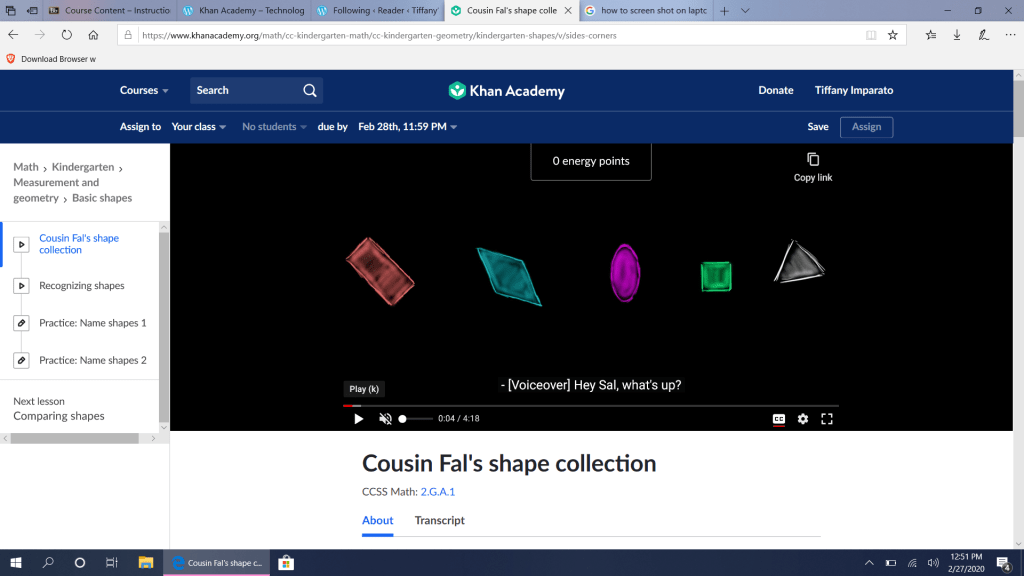
The next lesson I chose was geared toward kindergarten students about basic shapes. This lesson was comprised of two colorful videos and two sets of practice questions to reinforce the lesson and test students of their retention. Again this lesson was age appropriate and appeared to be well laid out. I like that they keep the videos short and to the point as children at this age are easily distracted.
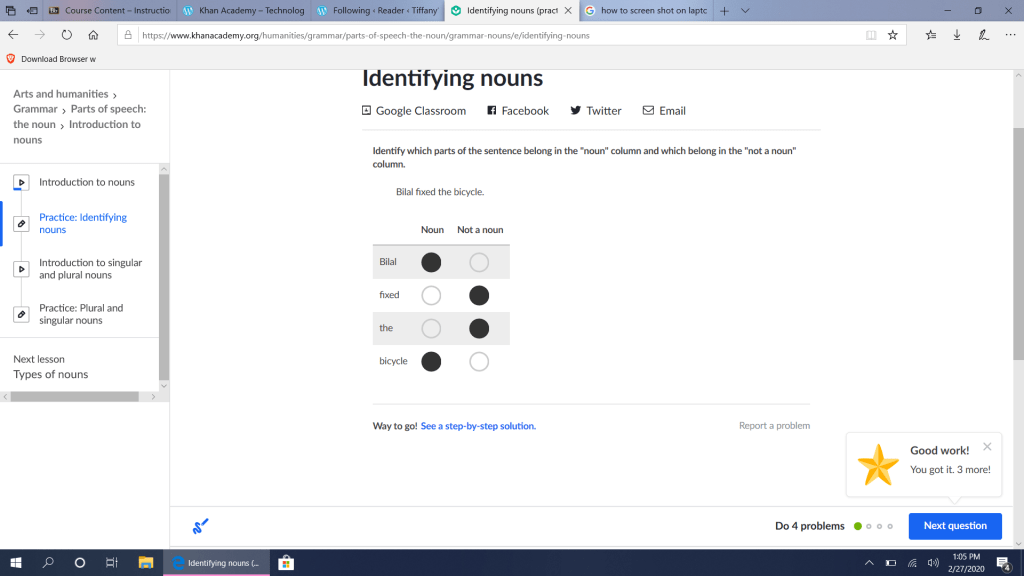
The third lesson that I selected to review was an introduction to nouns; this lesson included two detailed easy to follow video clips and two sets of practice questions. It gives students a clear explanation of what a noun is while briefly explaining both singular and plural nouns. I thought that the lesson was a well thought out introduction that can be followed up with more detailed lessons.
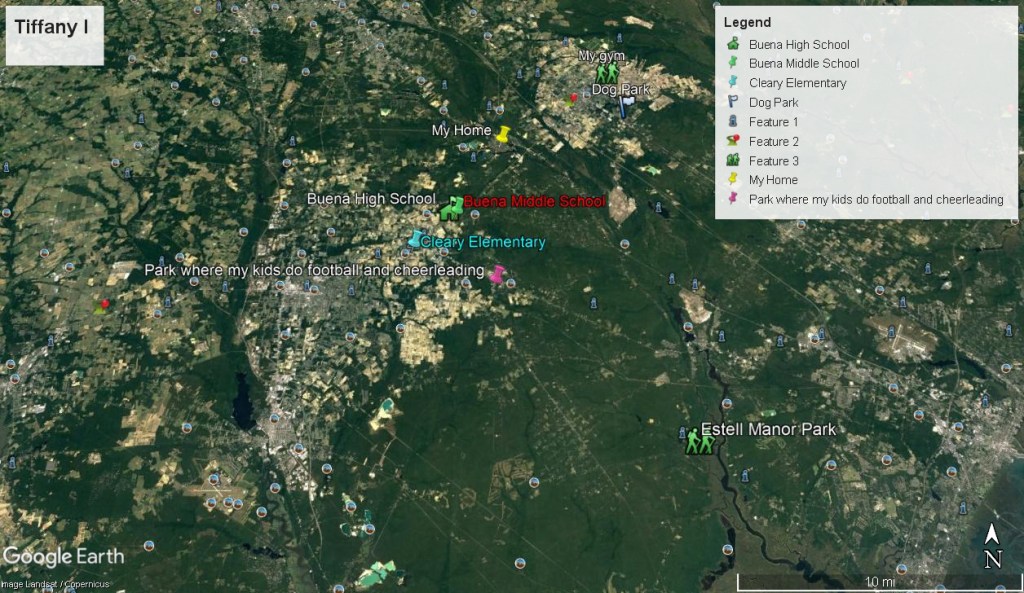
This assignment involved learning about the in’s and out’s of Google Earth Pro and creating my own personal map. I started by down loading the free program onto my personal computer which to my surprise was quite simple. Once the download was complete I was free to explore my neighborhood and surrounding areas. In the map I created below I pinned areas that are important to my family in our everyday life. I was able to add unique pins to highlight these areas and label them accordingly as well as include a legend. I included all three schools that my children are presently attending as well as the park where their extra curricular sports are held. I also included our gym as the entire family attends multiple times per week together. On the map you will also find Estelle Manor Park and our local dog park as both of these places we spend our weekends at frequently. Most importantly pinned in yellow I included our family’s home so you can see how centrally located it is to the other locations.
Worksheets are pages that include a specific lesson for a child to work on their skills within the classroom. They can come in a variety of different lessons and include multiple types of tasks. Some examples could be: puzzles, math questions, tracing of letters, and many other assignments. As like many other concepts within the classroom worksheets have their positives as well as their negative side when utilized. Some positive affects include building fine motor skills, encouraging independent thinking, and can be a tool to monitor a students current knowledge and abilities. There are also negative impacts that educators need to be aware of as well such as worksheets can not teach a student, worksheets do not encourage higher thinking skills, and they tend to be boring as students lose interest. I believe the answer to the question of whether or not to use worksheets is to use them in moderation. Their should be a healthy balance created in the classroom between a few worksheets and more hands on learning to create excitement, higher thinking skills, and knowledge retention. I believe it is important to not think of the worksheets as a lesson but rather as an enhancement tool to the lesson that is being taught by the teacher.
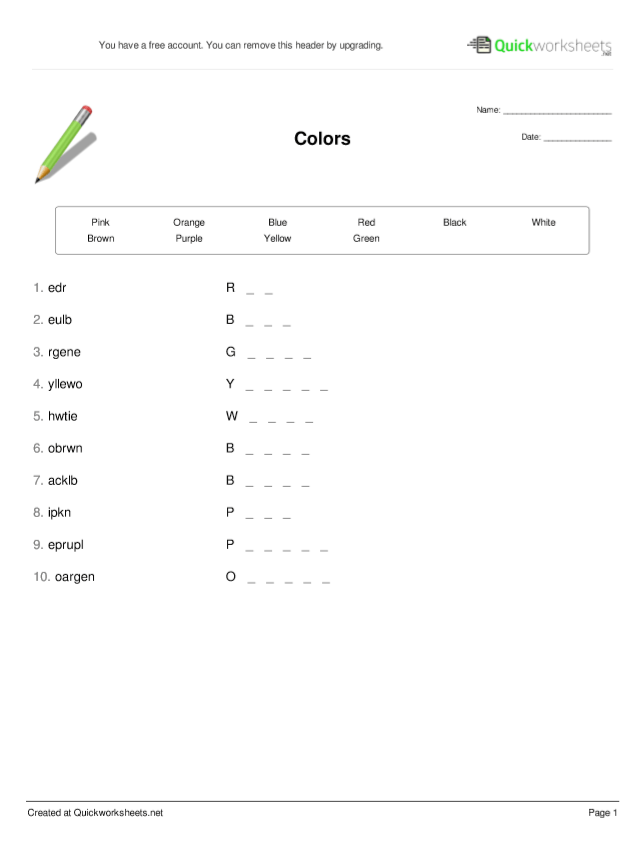
Below I have included an example of a work sheet that uses a puzzle to help with learning vocabulary words involving colors. I found it simple to use an online worksheet generator to input my word list and the program created the worksheet for me. The technology made it very simple to personalize each worksheet with specific information to enhance any lesson in a classroom.
A personal learning network or PLN is the creation of a network that includes support, connections, relationships, and resources that promote and encourage ongoing learning. A PLN is extremely important to an educator and will prove its worth through interaction that may result in professional growth, inspiration, and enlightenment. Creating such network is ongoing throughout one’s career as is their learning as well. Below I have complied some sites and blogs that interested me to lay the foundation of my own PLN. As I am slowly entering the world of an educator I plan for my PLN to grow along with me through this journey. It may include various components such as collages, blogs, websites, and other social media platforms that will allow me to interact with other individuals within the field.
Below I have listed some websites that I believe could be beneficial in my success in my future elementary education classroom.
1: The Learning Teacher Network has created an online community of educators that have a clear vision of using education to focus on maintain a sustainable world. Through the use of various platforms via online, print, and conferences they have created a unity of educators that are hopeful to educate their students and each other how to preserve of world for generations to come.
2: Teachers Support Network is an online network that connects educators with hiring professionals. They encourage recruitment, placement, development and retention in an ever changing job market.
3: Teachers.net is online support system that has free lesson plans, teacher chat boards, open job postings, classroom project suggestions, and even a live chat feature to speak with fellow educators.
4: Classroom 2.0 is a free social platform for educators to communicate, join webinars, find events, and research forums about various topics related to the educational field.
5: Goodreads is a website that offers great reviews and suggestions on selecting reading material. It has multiple different categories and could used across various reading levels; I believe it could be a fun tool in helping my students get excited about reading.
I have also complied some websites and blogs that encourage the marriage of education and technology within the classroom.
1: Curriki is online community that combines teaching with technology and has over 50,000 free resources that offer many lesson ideas. They also offer a blog, newsletter, professional development, and various groups that cover an array of topics.
2: Common Sense Education is a website devoted to helping teachers with the utilization of technology in their classrooms. They offer free lesson plans, app ratings, and advice how to effectively introduce technology into lessons.
3: Cool Cat Teaching is a website/ blog that covers stories of multiple teachers and highlights their accomplishments in making learning fun for their students. Many of the blogs posts incorporate fun ways to add technology into the curriculum to enhance the students experience.
5: Google Classroom this allows educators to have an organized platform form for homework, quizzes, and projects that students can access online both inside and outside the classroom.
They Provide various workshops that highlight effect ways to promote an increase of technological literacy within the classroom. Two examples they offer are Computational Thinking For Stem Educators K-12and Intro To 3D Printing K-12.
The New Jersey Educational Computing Cooperative (NJECC)
They are a nonprofit based at Mont Claire State University with a goal to promote and support the integration of technology in NJ’s K-12 classrooms. They provide workshops, professional development, monthly meetings, and various conferences to support their initiative.
Rutgers Continuing Studies Centers for Mathematics, Science, and Computer Education
They offer professional development, work shops, and summer programs that focus on various ways to utilize technology within the classroom. Many of their distinctive topics include curriculum fun projects to get students excited about learning.
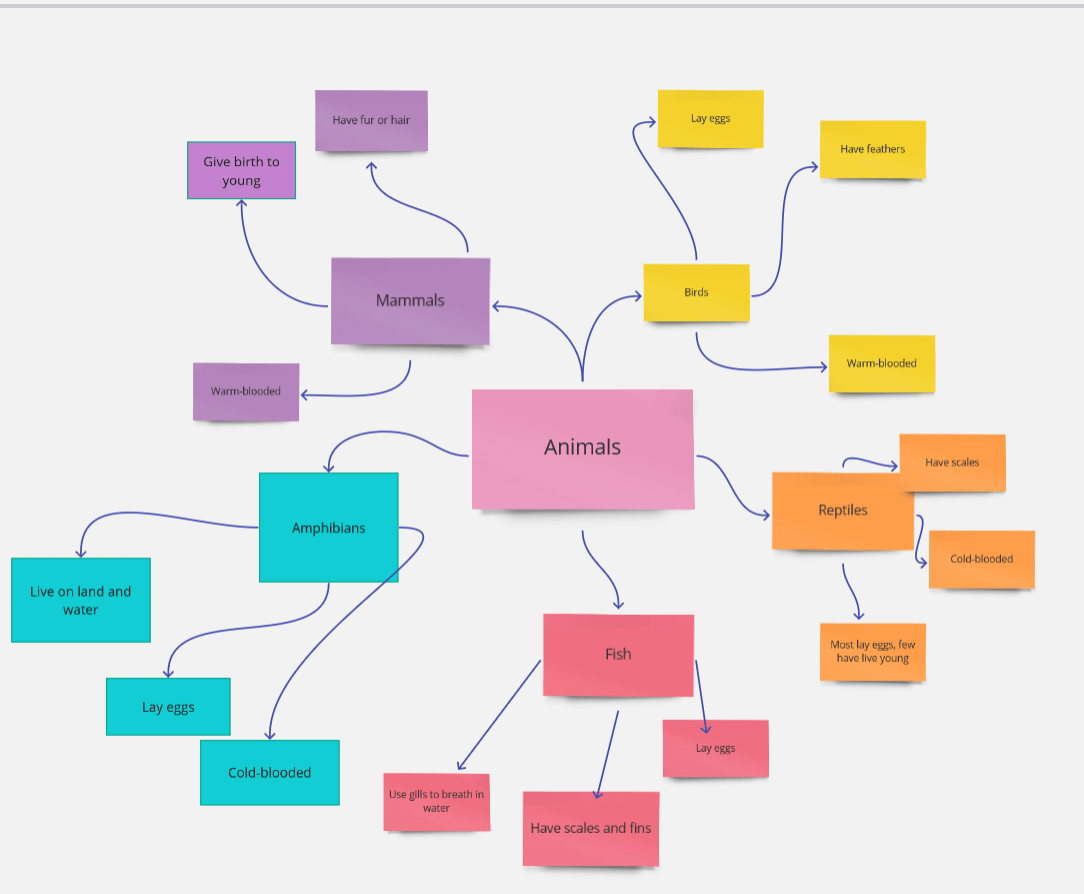
In this lesson students can explore the use of creating a concept map with a science based animal lesson. This concept can be altered to cover various age groups. Students will take a deeper look into the different traits and characteristics of different animal classes. The students will explore also learn what type of animals are warm or blooded, how they reproduce, and what their exterior is covered by. While researching about different animals they will learn how these traits help classify the animals. The use of the visual concept map is a great way to reinforce such a unique lesson.
1: I found a fun WebQuest entitled Fairy Tale Characters which is great for an early education classroom such as a 1st or 2nd grade classroom. It combines crucial literary skills, listening skills, and the ability for a student to express their opinions in an exciting way. I really like this idea because it is a fun activity that everyone can explore together and use their creativity to develop their own opinion. The lesson begins with students listening to a story being read aloud and the story is told in two different versions. The students are meant to focus on the plot, the characters, and plot. After the completion of the readings students are asked to create a writing piece about their favorite characters and a supporting drawing as well.
2: The next exciting WebQuest that I selected requires reading the book Five Senses by Aliki and encourages listening skills, retaining information, and teaches about the human body’s different senses. The lesson is geared towards students in K-2 classrooms. After the completion of the story students will be asked create posters that show the five senses in everyday life. Once the students complete their posters they will share them with the classroom. I think this is a great idea the includes individual expression and communicating skills as the students sharing their work and ideas with each other.
3: The final WebQuest I chose is called Let’s Plan A Vacation and it is aimed at students in second grade. This vacation planning lesson includes budgeting, money counting, creativity, and exploring the differences between wants and needs. I love this idea that the students are given a budget to create their dream vacation and have to put it all together while staying within the restrictions.
I am a mother of two amazing kids and one adorable French bulldog puppy named Ruger so life is very busy as a fulltime mom and student. I am currently finishing up my associates degree at ACC and have already been accepted for the fall to Stockton University. While attending Stockton I will be working towards a bachelors degree in education focusing on grade K-6. I look forward to encouraging children to learn to love learning.



 Tiffany's blog