I am an education major that is focusing on K-6 as I hope to get young children excited about learning. I am a mother of two amazing kids and a super cute French bulldog puppy named Ruger.
My task this week was to explore the website Prezi and all that it offers. Prezi is a fun and unque way to join technology and learning within the classroom. After taking someone time to get familiar with the platform I then went on to create my own presentation on Prezi. I again explored the learning theory of constructivism that provided a basic overview of the concept and examples of execution and details. I have provided you with the attachment to view the Prezi I created about this learning theory.
There are three main learning theories behaviorism, cognitivism, and constructivism. The truth is that there are many different ways that information is processed and received that creates and completes the learning process itself. Behaviorism is based upon the ideology that behaviors are acquired through conditioning that takes place with ones environment. It also places great focus upon observable behaviors and that these responses help shape ones actions. Cognitivism learning theory places the focus upon how one learns by the internal processing of information through their brain. Constructivism is a learning theory that supports that learning takes place through experience and being actively involved. I understand that there is no set blue print for each and every child and that learning could involve the mixture and combinations of any of these theories and may often change. I personally am drawn toward the theory of constructivism as I it reminds me of myself. I have found throughout my life that I learn best from being active and engaged throughout the learning process. For me it is important to actually go through the motions or steps of something as opposed to just reading about it; the physical connection helps me retain information as I have a better understanding. Below I will detail an activity I can use in my future classroom as an example of applying the constructivism learning theory into a lesson.
Science Sink or Float?
I imagine a fifth grade classroom activity that we can complete in small groups as a science lab to explore the concept of buoyancy. Each group would have a plastic pan filled with water and several objects before them. Materials include: scale, ruler, potato, apple, grape, baby carrot, and a leaf. Before the students begin I will have them record their hypothesis of which will float and which will sink. Next each group will weigh and record the weight of each item upon the scale. After completing the weights the will one take one object at a time and place it into the water to record its buoyancy and measure the water displacement. After all items are placed they are to review their recorded findings. The experience that the child gain hands on in my opinion will be much more valuable then just review this concept in the textbook.
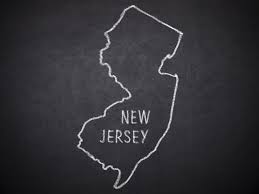
For this assignment I was given the task review the New Jersey Core Curriculum Content Standards for Technology. These standards set the blue print of expectations set within New Jersey’s grades P-12 across the state. The standards themselves are reviewed and revised as necessary every 5years the standards that I reviewed were adopted in October of 2014. The standards themselves are created and reviewed by a panel of parents, students, teachers, influential members of the community, and representatives of higher education institutions. Research, national standards, community needs, and student needs are a few of many concepts that help influence such standards within the state.
After carefully reviewing the standards I chose 4 indicators to explore further and to supply examples of how I can create classroom activities to reflect each. For this assignment I will be using a 1st grade classroom for my activities.
8.1.2.A.4 Demonstrate developmentally appropriate navigation skills in virtual environments (i.e. games, museums). Under Technology Operations and Concepts: Students demonstrate a sound understanding of technology concepts, systems and operations.
For a fun activity in my 1st grade classroom I would have each child use the website https://www.abcmouse.com/ to work on math skills twice per week. This would give the students time to play fun games that are based on math while practicing navigating the technology as well.
Indicator 8.1.2.E.1 – Use digital tools and online resources to explore a problem or issue. This is under Research and Information Fluency where students should be able to apply digital tools to gather, evaluate, and use information.
I think that I could apply this concept to a 1st grade science assignment where I challenge the children to research an endangered species. Once the children select their animal I will have them research 3 facts about it. They will then create a poster board with their research and photos that they found online to present to their peers.
8.1.2.C.1-Engage in a variety of developmentally appropriate learning activities with students in other classes, schools, or countries using various media formats such as online collaborative tools, and social media. This is under the section of Communication and Collaboration: Students use digital media and environments to communicate and work collaboratively, including at a distance, to support individual learning and contribute to the learning of others.
A fun project could be to have the 1st graders read their favorite age appropriate book while being recorded. These recordings can be shared with another classroom outside of our school creating an online video sharing between the two classrooms support both reading skills and technology skills.
Indicator 8.1.2.B.1 – Illustrate and communicate original ideas and stories using multiple digital tools and resources. This located under the Creativity and Innovation Concept that outlines that students should demonstrate creative thinking, construct knowledge and develop innovative products and process using technology.
I think an exciting project for 1st graders that supports this combination of digital tools and resources could be creating their own fairy tale. Students could first write their stories using the skills learned through a processing program, they can then create a google slide show with help from the teacher, and finally finish it up by recording their presentation and sharing it with their families via social media which will be monitored by the teachers.
I recently reviewed an article ” What We’re Getting Wrong About the Technology in Schools Debate,” by Keith Heggert. (https://www.edutopia.org/discussion/what-were-getting-wrong-about-technology-schools-debate-0). The article itself was very eye-opening as it explored the use of technology within classrooms and its role. After reviewing this article I did quite a bit of reflecting to form my own opinion on the use of technology in classrooms. This has been and will continue to be a great debate inside the educational community. Heggert within his article asked 5 rhetorical questions that I would like to answer below.
Is there some truth in Dr. Vallance’s stance that there was no place for laptops in schools?
I believe that if this technology is being misused that yes it may cause some harm or being deemed of not having a place in school. For example if children are misusing their laptops to just google the answers instead of doing the work themselves. I think that technology should be monitored and used properly to ensure that it is adding value to the students educational experience.
What is the point of the post?
The point of the authors post is to make us aware of what is going on both inside and outside the classroom. Truth is as educators we will be confronted with various technological advances throughout our careers and we have to adapt accordingly. We must use such advances to our advantage and create a positive environment for our students that helps further their education and embraces technology.
In what way should we use technology in schools?
Technology should be used in classrooms as a tool to enhance the learning experience. Truth is technology opens the doors to many fun and exciting ways to teach and reinforce materials in the classroom. When used correctly it can add a great visual element such as through a video, slide show, or even an interactive element.
If technology has become an ever-present constant in our lives, then surely one of the most important things that schools must do is teach students how to use it effectively and meaningfully?
Students will be exposed to technology throughout their life at an early age so we can not ignore these advancements. I think that it is vital to teach students to use it safely and effectivly. It is crucal that we teach students the importance of using valuable sources and identifying their credibility.
We teach students about a whole host of things that are meant to help them be useful citizens in the future, so why wouldn’t we teach them about using technology safely and effectively?
Truth is technology is vital to our future generation therefore we must teach our students the correct and effect way to utilize its benefits. These technological skills will prove to be just as important as math or linguistical skills for this future generation in the workforce. We owe it to our students to give them the best fighting chance.
In my opinion I believe that utilizing technology in education is vital. In my house I have a 5th grader, 7th grader, and 9th grader and with all this COVID 19 social distancing going on I am impressed with how the are adjusting to online learning. Through google classroom, zoom, khan academy, and freckle my children have continued to receive various lessons and assignments. This is a great example of how technology be useful in education. Thankfully, our schools have prepared my children to be able to easily navigate these online services to continue their lessons remotely.
The ISTE Standards are a blue print to ensure that students receive the best possible education experience in an every changing technological society. These standards cover vital skills necessary and see that students have a voice within their educational journey. Following the various standards educators can transmit various learning material and techniques that will help broaden a students knowledge and create well rounded citizens. These important skills that will prove useful throughout their lifetime. They include: Empowered Learning, Digital Citizens, Knowledge Constructor, Innovative Designer, Computational Thinking, Creative Communicator, and Global Collaborator. I decided to chose one standard that I was drawn to research more about and design three classroom activities that support my selected standard.
Empowered Learning
According to the official ISTE Standards website empowered learning is “students leverage technology to take an active role in choosing, achieving and demonstrating competency in their learning goals, informed by the learning sciences.” I like how this standard actively involves the student to have a voice and role within their own education; I believe such involvement could positively affect students and their success.
This standard includes the creation of a network in which students customize their learning environment. I think a fun way to create their own network is to have students create a blog where they can express themselves through various writing tasks and explore their peers blogs as well.
Another important feature of this standard is goal setting. I think that this could be fun for students to set goals individually with their teacher. Students could pick three goals for example to master by the end of the year; their teacher can support them in their achievement by meeting each semester to review their progress. At this review time both the teacher and student can together decided if any changes need to made towards mastering such goals and check on progress.
Students are also encouraged to use technology to receive feedback for self improvement. A fun exercise could be to have students read their favorite book and then create a video or slide show to be posted online for their peers. After reviewing the slideshow or video each peer will then complete an online survey about how they viewed the presentation. This vital information can be used by each student to recognize their strengths, weaknesses, and create improvements going forward in future tasks.
I think that it is wonderful that our governor is behind such an amazing program in our high schools across New Jersey. There is no doubt that the computer science fields are essential to our future generation survival. The push to teach our students the vital needs and details technology and creating excitement for careers within the computer science fields will only greatly benefit our high school students. I took the time to explore a few websites and organizations that teach basic coding concepts which can be found below.
Code.org
This organization is a nonprofit that was created to broaden the availability of technology with a focus on underprivileged youth and females inclusion in computer sciences. After exploring their website I must say the tasks look fun to complete. They have games and quests that are one hour coding challenges that range from prereaders to high school aged students. I think this program looks like it could keep children engaged through fun experiences while teaching them valuable lessons. https://code.org/learn
Code Academy
The Code Academy offers unique and individual online learning to teach various concepts of coding and computer science technology via their website. After completing a survey on ones needs and wants the site will then create an individual learning plan to follow. This material is not suited for children but might be a good idea for advanced high school students. https://www.codecademy.com
Tynker
Tynker claims to be the #1 coding platform for children with 60 million kids using it world wide; they also are offering free resources due to the school closings. They have various programs geared toward getting kids excited over coding for example: building apps, creating websites, learning the langue of coding, and many more. Their fun tasks can be done individually at home or on large scales such as schools or camps. After looking over their website I can easily see why they are leading in the industry because it looks fun, new, and exciting. https://www.tynker.com/
Coder DoJo
The coder dojo movement believes in a relaxed environment meant to teach our youth the understanding of program langue as it is vital to our modern world and advancement. They believe that these skills should be taught early on and that everyone should have access to such material. Their dojos are relaxed, fun, and free clubs where children can learn this valuable information through online sessions. Their community is made up of over 12,000 volunteers across 111 countries all with this common goal. I really like the concept that they are using and like how available they are. https://coderdojo.com/
I really enjoyed exploring the website https://www.thinglink.com/ to create a virtual interactive tool to use within my future classroom. I decided to create a fun lesson geared toward early elementary students about Abraham Lincoln. Using the free website I was able to attach a YouTube video, photos, facts, and even a copy of the Emancipation Proclamation. I think that the addition of this fun tool could be a way to get students excited about learning history and various subjects; I look forward to utilizing this more going forward.
The question whether teaching is an art, or a science is something that I have not really thought about before this assignment. After reading both selections I conclude that I believe that teaching is truly a combination that does not fit into either category alone. Yes, teaching requires one to tap into their creativity to connect with their classroom and deliver the selected materials and curriculum to students in various ways. I believe that an effective teacher uses fun and creative ways to make the learning process more interesting and exciting when working with children; a teacher should explore their expressive side to keep their students engaged in the classroom. One cannot ignore the fact that a successful educator most likely uses the scientific method in their class each day without even realizing it. It is important to observe our students much like variables within an experiment we also create hypotheses about their learning and test them using assignments, quizzes, and tests. Much like a scientific experience a teacher can then take the results and alter what is needed for the greater good of the classroom. To be a successful teacher I think one must create a healthy balance that works with their students and must monitor and change his or her techniques as needed. Truth is there is no mold or blueprint to follow as each and every student and their journey is unique.
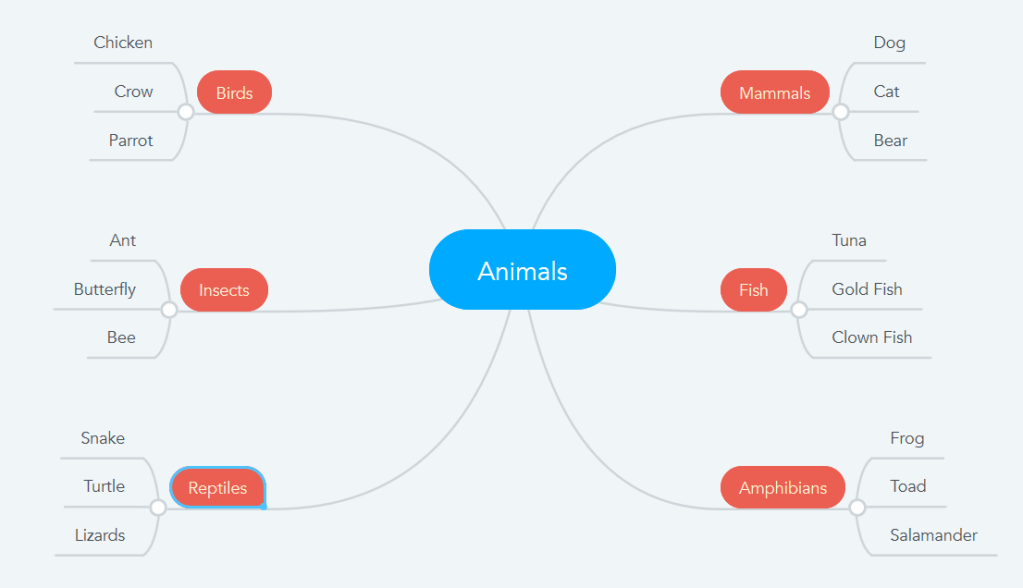
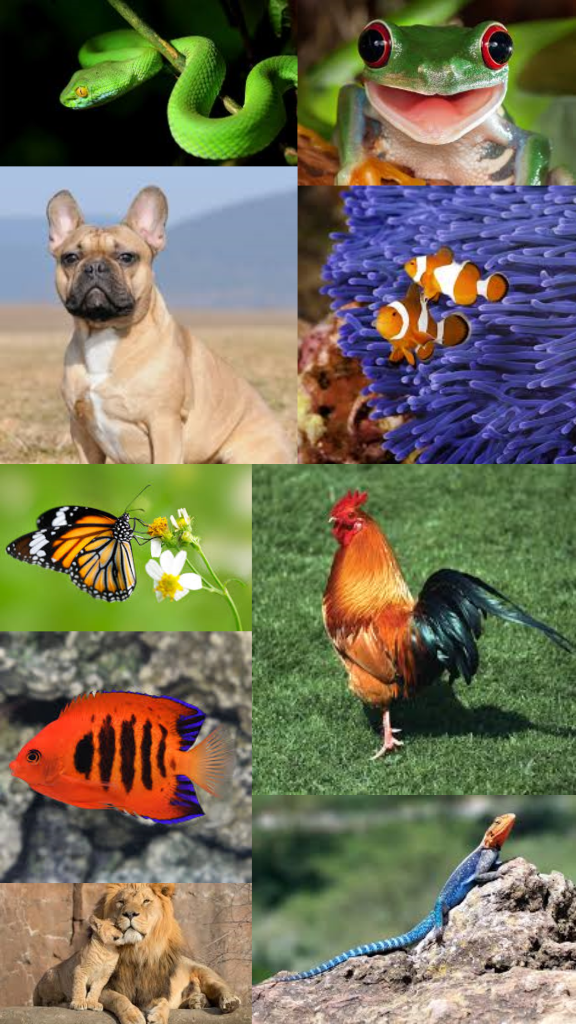
Wow the past two weeks have shown me so much in regard to teaching and the introduction of technology. I am proudly a mother of two kids and one step daughter that I have had the pleasure of navigating their home instruction journey with during this unique experience. In my house we have a 9th grader, 7th grader, and 5th grader so I am getting a variety of hands on experience and learning as we go. As a future educator this has opened my eyes to so many things that I can utilize in my own future classroom and answered many questions that I didn’t even think about prior to this. I know that I myself am a visual learner and that having supportive visual material in the classroom is important to reinforce lessons being taught. I explored three websites to create my own materials to visually support a lesson being taught within my classroom about the different types of animals and their classifications.
For my first example I used https://www.mindmeister.com to create a concept map of the different classifications of animals and example of each group. This is a basic visual learning tool that can help young students visualize how these different animals are categorized.
Next I used https://worditout.com to create a fun visual aid that included the different types of animal classifications and a few characteristics to help the students think about how each classification differs.
For my third example I used https://www.befunky.com to create a visual collage with different pictures animals that represent the various classes we will be exploring in the lesson.
Technology is an extremely powerful and helpful tool available to both educators and students in the classroom. While reviewing the official website for United States Department of Education Office of Educational Technology I was able to take a closer look in to some of their key priorities for modern day teachers. https://tech.ed.gov/teachers/ During my review process I decided to take review three that I found to be especially important.
The advancements in technology have created new and easy ways for teachers to extend learning beyond classroom boundaries. Learning communities that include students, fellow teachers, family members, experts, and more are easily accessible via technology. Materials and collaboration support learning beyond the classroom and staying up to date is essential to this development.
It is extremely crucial to the learning environment that both educators and students have reliable connectivity in the classroom. Without having a reliable connection students and teachers can not take full advantage of what technology has to offer in enriching their education. This is vital to connecting our classrooms with high levels of learning and the proper resources.
The idea behind open education is to ensure educational opportunities are available to all students. The creation of an open education ecosystem includes many levels to ensure that materials are available without restrictions such as copy rights. It is to support free learning to students and limit barriers that may try to limit the exchange of information and materials. This is vital for our students to have access to such materials for years to come as we grow.







 Tiffany's blog